
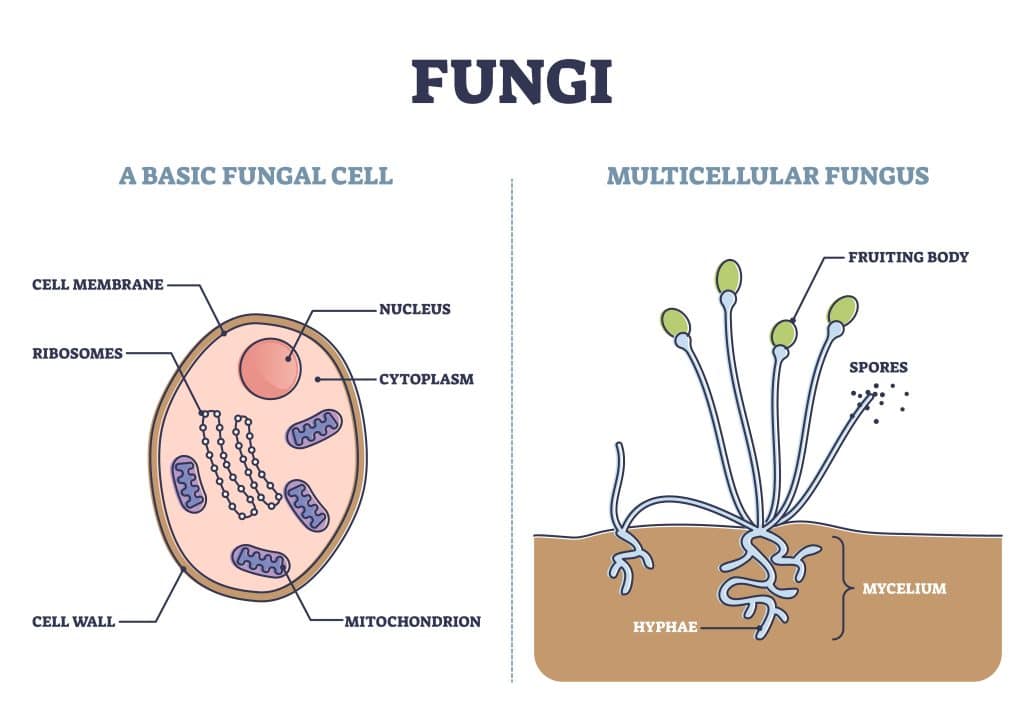
Fungi are a unique group of living organisms that are separate from plants, animals, and bacteria. They include molds, yeasts, and mushrooms. Unlike plants, fungi do not make their own food through photosynthesis. Instead, they absorb nutrients from organic material around them. Their cell walls are made of chitin, the same substance found in insect shells, which is one feature that distinguishes them from plants.
In terms of biology, fungi usually grow as long, thread-like structures called hyphae, which form a network known as mycelium. They reproduce both sexually and asexually, most commonly by producing spores that can spread through air, water, or living organisms. These spores allow fungi to survive in harsh conditions and colonize new environments. Some fungi, like yeast, are unicellular, while others are multicellular and can grow quite large.
Ecologically, fungi play a crucial role in maintaining balance in ecosystems. They are primary decomposers, breaking down dead plants and animals and recycling nutrients back into the soil. Many fungi also form symbiotic relationships. For example, mycorrhizal fungi live in association with plant roots and help plants absorb water and minerals, while lichens are partnerships between fungi and algae or cyanobacteria that can survive in extreme environments.
Fungi are important to human health in both positive and negative ways. Some fungi cause diseases, such as athlete’s foot or more serious infections in people with weak immune systems. However, fungi are also extremely beneficial. Penicillin, one of the first and most important antibiotics, was derived from a fungus. Other fungi are used to produce medicines, enzymes, and vitamins.
In food and industry, fungi are widely used and highly valuable. Edible mushrooms are a nutritious food source, providing protein, vitamins, and minerals. Yeast is essential in baking and brewing, as it ferments sugars to produce carbon dioxide and alcohol. Fungi are also involved in making cheese, soy sauce, and other fermented foods. Overall, fungi are essential organisms that support ecosystems, human health, and many everyday products.
examples of fungi plants


download pdf
Structure of fungi
The basic structural unit of most fungi is the hypha, a thin, thread-like filament. Hyphae grow and branch to form a complex network called the mycelium, which is usually hidden within soil, food, or other organic material. The cell walls of fungi are made of chitin, providing strength and protection. Some fungi, such as yeast, are unicellular, while others are multicellular and may form visible structures like mushrooms, which are actually reproductive parts.
Reproduction
Fungi reproduce in both asexual and sexual ways. Asexual reproduction is more common and occurs through methods such as spore formation, budding (in yeast), or fragmentation of hyphae. Sexual reproduction involves the fusion of specialized cells from two compatible fungi, followed by genetic recombination. In both cases, fungi usually produce spores, which are lightweight, easily dispersed, and capable of surviving unfavorable conditions.
Life Cycle
The fungal life cycle typically begins when a spore lands in a suitable environment and germinates into hyphae. These hyphae grow and form a mycelium that absorbs nutrients. Under favorable conditions, the mycelium produces reproductive structures that release new spores, continuing the cycle. In fungi that reproduce sexually, the life cycle includes stages of plasmogamy (fusion of cytoplasm), karyogamy (fusion of nuclei), and meiosis, leading to genetically diverse spores.
Fungi play a vital role in ecosystems by keeping nutrients circulating through the environment. They are key regulators of ecological balance because they break down complex organic materials that most other organisms cannot digest. Without fungi, dead plants and animals would accumulate, and essential nutrients such as carbon, nitrogen, and phosphorus would remain locked away instead of being reused by living organisms.
Fungi role in ecosystems
One of the most important ecological roles of fungi is decomposition. As decomposers, fungi release enzymes that break down dead leaves, wood, and animal remains into simpler substances. These nutrients are then returned to the soil, where they can be absorbed by plants and other organisms. Fungi are especially important in breaking down tough materials like cellulose and lignin found in plant cell walls, making them indispensable in forest and soil ecosystems.
Fungi also form symbiotic relationships with other organisms, meaning both partners benefit. A major example is mycorrhizae, a partnership between fungi and plant roots. The fungal hyphae extend far into the soil, greatly increasing the plant’s ability to absorb water and minerals such as phosphorus. In return, the plant provides the fungus with sugars produced during photosynthesis. This relationship improves plant growth, soil structure, and overall ecosystem productivity.
Another important symbiotic relationship is seen in lichens, which are formed by a fungus living together with an alga or cyanobacterium. The fungus provides protection, moisture, and support, while the alga or cyanobacterium produces food through photosynthesis. Lichens can survive in extreme environments such as bare rock, deserts, and polar regions, and they are often among the first organisms to colonize new or disturbed areas, helping to start soil formation and ecological succession.
Overall, through decomposition and symbiosis, fungi are essential for ecosystem health, stability, and sustainability.
Related pages
- floating and sinking
- Experimental investigation of Archimedes’ principle
- Applications of cathode ray oscilloscope(CRO)
- Introduction to Photo electric effects
- ducksters.com science
- mighty microgy